Monday, July 18, 2011

Doubt


Graffiti artists have been providing me with a lot of inspiration lately. Though one of my friends says that graffiti is the art of ruffians, I think that some graffiti artists are deeper than we give them credit for. If they were merely punks armed with cans of spray paint, why would they not choose to paint some insipid profanity rather than an abstract word that seems to indicate a struggle that they face?
I wonder what this one is doubting--or maybe it would be a shorter answer if I asked what he is not doubting.
I've frequently wondered at people who graffiti walls, in much the same way that I wonder about people who take the time to write on bathroom stalls and the people who carve their names in the peeling paint of handrails. Why is it in our nature to destroy things in order to leave our mark? Now there's a puddle worth splashing in someday.
For now, enjoy some Doubt.

Sunday, July 17, 2011

Robbed

I was robbed in Dollar Tree yesterday by a very bad smelling homeless guy.
You should know this first—it was my own fault. After all, I was at the Dollar Tree at the ‘bad Wal-mart,’ the Wal-mart known for rape and murder in the parking lot. I set myself up to be victimized. So don’t pity me—too much.
As I scrounged along the back wall for cleaning supplies, a man brushed by me pushing a shopping cart in a semi-reckless manner. His more notable offense, however, was the smell left in his wake, the sordid odor of too many days without deodorant and toilet paper and even longer of being without a bath. As he passed, I smiled, failing to connect the ideas—bad Walmart+bad smell=potentially bad person (although somewhere in that syllogism might be some faulty logic.)
After gathering paper towels and a bottle of ‘Window’ cleaner cleverly labeled to look like the real ‘Windex,’ I went in search of rubber gloves. I turned the corner just in time to see a trail of socks lying in the aisle, and yet another pair which appeared to have just tumbled out of the stinky man’s cart. What happened in the next second (which all makes sense to me now that I can replay it in slow motion) saved me the embarrassment of stopping the man to inform him of his sock trail.
When a manager started walking toward him, I heard the man ask her where he could find some other item, as if he had a shopping list like any ordinary shopping citizen.
But the manager disregarded the inquiry and with hands on her hips, stated in no discreet tone, “Sir, I need you to take the socks out of your pants.”
“Out of my pants?” he asked, feigning innocence, his guilt becoming as apparent as his smell.
Without parleying with him further, she reached into the front of his pants to grab the hidden socks. “You come in here again, and I’ll have you arrested.” She yelled as he abandoned his decoy cart and charged out of the store.
I hoped that he wouldn’t come back with a gun. But that fear was quickly suppressed with the rationale that if he didn’t have money for socks, he wouldn’t have money for a gun.
After reasoning away the fear, however, deeper emotions immerged—vulnerability and violation. Continuing to peruse the aisles, I felt exposed, as if my eyes had been opened to another side of humanity, a side that I had heard of, seen on TV, but never witnessed so close as to fill my nostrils with its stench, and so close for me to have smiled at.
The man was stealing socks. And, at that, he didn’t even get away with them. You’re probably rolling your eyes at my naivety, at my innocence.
But he made off with something more valuable than socks. He took with him a part of my trust. He robbed me of a part of my security.
On the verge of tears, I wished to be held, to be protected from what else in life will betray my trust. I wished to be assured that I shouldn’t stop offering smiles rather than cynicism and suspicion, kindness rather than condemnation. I wished that people, at their core, were truly good as I often hope for them to be. And even in this, perhaps, his crime was my own fault, for ever trusting my fellow human to begin with; for having a heart that truly wants to believe that we’re a happy family; for thinking that the crimes I see on TV are committed by some life form other than my own.
Maybe I should thank him for helping me put my guard up a little higher, for helping me to exercise wariness and sharpen my suspicion.
But thinking back on it now, before the fear, before the vulnerability, the most significant thought that I had somewhere between her digging the socks out of his pants and him charging out the front door was, “Man, I hope she washes those socks before she puts them back on the shelf.”

It

(Written December 2010)

Every semester, the night before final exams begin, we host a series of ‘help classes’ for the EN 101 students drowning in principle parts, parts of speech, diagramming, clauses, and the very tricky pronoun antecedent agreement—-the help class over which I was presiding.
He sat there, in the back of my classroom, handsome and callow. It was clear that he had time to waste—I did not. With a mug of hot chocolate waiting in my office, a stack of papers, and an email to write to a dear friend, not to mention the other gajabillion things I have to do before I leave on Friday for Christmas break, I wasn’t about to let him waste my precious time by disrupting the help class. In the middle of a sentence, I stopped talking. The silence boomed like a megaphone through the room. When he looked up at me, disinterest and cockiness filled his eyes--the look of a guy used to having women beg for his attention rather than demand it, as I was at that moment. And from the way his face turned into a half sneer, I could tell he didn’t like the change in circumstances.
I put a hand on my hip and raised my eyebrows. “You know the only thing worse than EN 101 the first time?”
He stared at me with contempt, opening his mouth to give a smart reply.
Before the words left his mouth, I smiled and answered, “EN 101 the second time.” I winked at him. “Little guy, you’re just too good lookin’ not to be smart enough to pass this exam tomorrow. Better pay attention. You want to tell me what the answer is to this sentence?” I tapped the transparency with my pencil. The sentence read: None of the girls remembered to bring (her/their) lunch.
He took one glance at it before crossing his arms and jutting his chin up toward the screen. “The right answer isn’t even up there. The answer should be ‘it’. Since None is a neutral pronoun.”
I stared at him for a moment, hoping that my gaze might somehow generate the motivation for him to take the leap over the brink of boyhood to manhood sometime soon—-before he and the blonde noodle babe he had been flirting with the whole time managed to reproduce.
I considered my response for five seconds, never taking my gaze from him. “Well, then since you’re obviously smarter than my transparencies, I’ll give you an option: you can either stay in here and pay attention trying to glean what little my teaching experience might be able to proffer you. Or you and it,” I nodded to his lady admirer, “can leave now, fail the class tomorrow, and take it again next semester together.”
He looked indignantly around at the other students in the class, as if looking for a posse to rise against the mini English instructor at the front. They all sunk a little deeper in their chairs, as if making sure none of them even looked willing to cause an uprising. (I think little teachers scare them.)
Finally, he crossed his arms a little tighter, slunk down until his chin almost touched the desk top, and didn’t say another word.
It was my turn to smirk. Without losing stride, I flipped the overhead light back on and said, “Now, where were we?”

Pappy


This was a collection of memories about my grandfather which I read at his funeral in February of 2009.


Some of you knew him as a contractor or a customer, others knew him as a friend, one of you knew him as a best friend and a soul mate, six of you knew him as Daddy, but sixteen of us knew him as Pappy.
Not long ago, my sister Nel and I were talking about how we take for granted the idea that grandparents have an inclination toward excessive and impulsive spending, and the notion that they are endowed with all the time in the world, the wisdom of the ages, and a heart open to love and patience. As I’ve grown, though, I have realized that like everything important in life, none of those qualities just happen; they are choices, all choices that Pappy made.
Pappy did so much in his life—more than a 200 word obituary, or this short essay, or five display boards of pictures could possibly portray. Some of his accomplishments I just discovered as we prepared for his funeral. But I like to remember the little things that made him “Pappy” to us.
I remember the way he knew a little bit about everything. It was impossible to spend time with Pappy without learning something. Whether it was through a trip to Gettysburg and Harpers Ferry or by visiting antique stores or by hearing the stories of his childhood, I always discovered something new.
I remember his ever present whistle and loud throaty laugh; his version of “Let Me Call You Sweetheart;” his stubby Merthiolate coated fingers and his offers to apply the orange, potent medicine to any of our scratches and cuts; the way his hair tuffed up in the back after a nap; his love for Mamaw—always bringing her little things and surprises. I’ll always remember the twinkle in his blue eyes when he had a secret or a surprise; his never ending supply of plaid shirts; his eagerness for a snack—especially the late ones which included Devil Dogs; the Ford Mustang that he restored and loved—and sold before he could give it to me as a graduation present; the way he loved to tell stories and laugh at his own jokes; the way that he and Mamaw couldn’t go to bed until they got down on their knees and said their prayers. I think all of us grandkids can remember a time when we’ve worn Pappy’s glasses at the tip of our noses and pressed the buttons on the calculator at his desk; and we’ve certainly all endured his tendency for reckless driving at one time or another.
Nel and I can remember the times he teased us while we were primping and preparing to go somewhere. He told us that instead of hairspray, we might as well put sugar water on our hair. He constantly mocked us as we applied our make-up—assuring us in his own teasing way that he thought we were beautiful just the way we were. We remember the way he and Mamaw made the trip to South Carolina for our birthdays and then left the same day to go home; and we also remember every time we left to go back to South Carolina from Maryland the way that he would cry—and not bother to hide his tears.
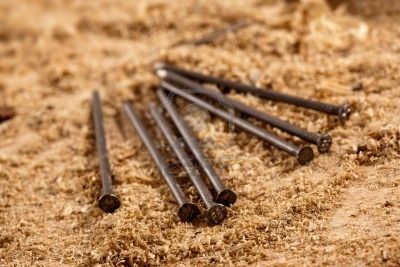
I can remember trailing my fingers through the sawdust in his shop while he worked on a project; I remember feeling as if I were with a celebrity when I walked with him anywhere in town, because it seemed that he knew everyone. When I asked him “who was that?” he would answer, “Just someone I did work for.” But I knew it was more than that—Pappy rarely ever just ‘did work for someone’ without making some other kind of mark in their life or heart. I appreciated his natural inclination to build—it seemed like his hammer touched every building in town in some small or large way. Even his company trucks spoke of his legacy with the words “Many happy customers” written across the side or the truck with a bright yellow smiley face printed beside it.
Pappy loved to make people happy. One of the most vivid memories I have of this was in June of last year, when we were preparing for Nel’s baby shower. While we were out shopping I noticed a little wooden train at the Amish market. Each train car was a letter which connected to spell a name. Later that day I suggested we go back and get one to spell out the baby’s name at the shower. Pappy agreed but when we went back to buy it we discovered that each little ‘car’ cost five dollars---for six of the train cars Pappy would be shelling out a lot of money for such a petty thing. But in typical Pappy fashion, he laughed about going broke—and then reached for his wallet.
But my favorite memory was one of my last of Pappy. He was standing in front of all of us at their 50th anniversary party beaming, so in love with life. With the look of a man who had come back from the dead to the land of the living, he said, “I’m ready to live my life for the next fifty years.” And when he said “live,” he meant it. He poured more into those next seven months than most of us will put into a lifetime and he pursued life with a casual disregard for the worries that hold most of us back like pride, money, time, or excuses.
Recently I heard these words to a song which I feel describes the lesson that Pappy was blessed enough in this life to learn—what I think he would want us to learn from his life:
“You only get one time around
you only get one try at this—
One chance to find out
The one thing that you don’t want to miss;
One day when it’s all said and done,
I hope you see that it was enough
This one try, one life to love.”

Saturday, July 16, 2011

Adventure Philosophy

(Written in June of 2010)

On my way to Boston this past week, I lost my cell phone at 20,000 feet off the ground, right above, oh let’s say, D.C. You know the feeling, don’t you? The world shrinks to the size of the airplane seat. All other problems of the universe gape at this moment of isolation—the sacred cell is missing. The connection to safety has been severed bringing that tickle of terror in the top of your torso, a flutter of fear in your heart.
I groped in the dark recesses of my carryon bag, around an obstacle course of lotion bottles, books, pencils, hair brushes, and headphone cords which laced like tentacles around my hand. My fingers crawled at least three times across every inch of the bag, grasping in vain for the plastic phone.
Pulling everything out onto my lap, I pushed down the impulse to panic. Finally, I repacked my bag and settled back in the seat, resigning myself to the reality that my phone had been crushed in Atlanta by one of those carts that take elderly and obese people from terminal to terminal, or was currently being pawed by a greasy fingered, unattended child who was at that moment making expensive calls to random parts of the world.
Looking out the window at the Monopoly landscape below, I shrugged; I was still alive and gliding toward the Maine coast, a lobster, and spending time with the friend sitting next to me. This newly discovered inconvenience was just one more layer on my adventure.
Here lately, that’s how I’ve regarded any deviation from the ordinary—and sometimes, yes, especially the ordinary itself. If I’m not in the hospital, in jail, or the morgue, I’m just fine (this attitude having been cultivated during any number of my unintentional jaunts around the bad part of Atlanta). I’ve seen what worry can do, seen it devour joy for breakfast, contentment for lunch, and common sense for a snack in between. I want no part of this destructive tendency for myself—not anymore. So instead of allowing worry to control me, I sit back and see what’s in the adventure for me to enjoy or learn. Irresponsible, unrealistic you call me? Maybe; but I don’t think so.
My choosing to view life’s perturbing moments as an adventure is really no different from another person’s tendency to view them as a drama or a crisis. I’d rather face my life as an adventure—for as uncomfortable, disappointing, or inconvenient as this life may be, everyday IS an adventure waiting to happen. Please don’t mistake me for a starry-eyed romantic or a dramatic, or—good grief— for Anne of Green Gables. I know just what kind of world it is in which I dwell: it’s got no room for another person just out of reality’s reach. So let me explain.
Adventure—what does it mean to you? For a long time, the word held an expansive definition to me. Erroneously, I assumed that an adventure was a life or death quest of National Geographic proportions with an exotic backdrop. A few years ago, though, the word took on a new meaning to me. Perhaps it came from getting too many people frustrated with my carefulness or tendency to panic. Or maybe I just got tired of nearly losing control of my body functions whenever I was forced into a new situation.
I lived the first eighteen years of my life wrapped in a chrysalis, of sorts, if only, perhaps, a chrysalis of protection. Homeschooled and awkward, I, convinced of my inability to survive outside the protective silk, was content to stay wrapped inside. I’ve often wondered if a butterfly left in its chrysalis would fade or mold.
A year after I graduated from high school, plagued with debilitating fears and a sense that things couldn’t possibly be worse, I worked as a counselor at a summer camp for special needs people. There I was exposed to individuals and circumstances that helped me poke my head out of the chrysalis to a world that would indeed accept me, a world that I could survive in and that I was curious about. Thinking back on it that was the perfect place for my emerging—a place where everyone was accepted.
My next step was a butterfly’s equivalent of flying off the branch where it had been drying its wings. When I went to college, God began to further help me overcome my fear by providing patient friends who coaxed me off that branch that I had been chrisalised on for those years. They helped me step outside my comfort zones and take part in things that I hadn’t before. I won’t lie—it took a few times of stumbling for me to realize that the leap was worth a fall.
I stopped looking at what could happen, and started looking for what might happen—many things could happen (meaning have the ability to happen)—no doubt, disaster is just a strand of grace away. But what might happen (denoting my permission) depends upon two things: my willingness to accept an adventure when presented with one and my initiative to make an adventure happen—no matter how scared I am of it.
Adventure, after all, has very little to do with the venture itself and everything to do with the danger, the fear that you perform in spite of, no matter how small or innocuous it may be.
When an adventure stares me in the face, I have to take it up on its challenge. Whether it’s a jet ski idling in water which very easily could drown me. Or a raw oyster which potentially could induce vomiting. Or an empty seat beside a handsome man which could turn out to be yet another episode of social awkwardness. Taking on adventures has become an intricate part of who I am. I’ve even come to peace with being directionally challenged, reasoning that it’s just a means of meeting wonderful people when I stop and ask for directions.
But along with understanding that life is full of adventures, I’ve come to view life as a grand adventure itself. I’ve begun to understand what is in me—the capacity to explore and with exploring to understand some greater aspect of the world around me and, most excitingly, of who God is and what He has done in orchestrating my life story.
Everything happens for a reason. Now, I don’t mean a preemptive reason—I don’t believe that God slashes your tire so that you can avoid an accident down the road. But I believe that in that slashed tired you can learn patience, you can share Christ with the person who helps you change it—which of course would be the greatest adventure of all.
I won’t say there aren’t days when I don’t wish to be living in a future chapter or to turn the page back and rework the plot minus a few ‘adventures.’ I won’t say there aren’t still moments when fear overwhelms me, when worry wears a hole in my gut. But it’s when I can wholly leave behind the chrysalis of worry, fear, or insecurity that I can finally see the bigger picture that I am meant to change and be changed on this planet, even if not for this planet. And it’s through those moments of danger or discomfort or unsureness that I am formed and transformed. Life is an experience and if you’re not going to experience it fully, you might as well just curl up and die.
It’s this sort of opportunity that I see, peering out the bus window just now on my way back to the Boston airport. It’s how I look at the empty seat next to me where a passenger might choose to sit at the next stop, where a smile could launch a conversation that could cultivate a friendship that could last for a lifetime. Even the unknown is an adventure.
By the way, I found my phone lodged between me and my seat buckle when I stood to leave the plane in Boston. For as much as I’m always thankful for an adventure, I’m glad when discomfort or inconvenience can be averted.

Labor

Every teacher, no matter how devoted, reaches a point in the semester or year when she’s had it, when the students have got to go, when the break is the only impetus driving her to function. This describes me at the end of each semester. In most cases, I want the students to leave so badly that it’s not until weeks later that I feel the full sadness of their absence. While most of my classes behave as an angel band, some of them can be regular devils. Some of them fight me; some of them love me; but all of them need me. And the semester depletes me of strength.
When I close my office door, with them gone for the semester, and with the last paper graded, the last grade posted, and the folders thrown away in jubilance, I take some time to lie back and rest from my work, glad that another class has gone forth. Inevitably, I ponder the painful 14 weeks of laboring to push mature, grammar savvy adults into the world. I think of the ones who miscarried-—left my class before I was able to teach them all they might have learned. Others cross my mind who were stillborn, as ignorantly dead as when they entered my class, achieving just what they had decided when first they claimed their seat—-failure. But the ones I hold to are the ones who, through a tight uncomfortable squeeze, persevered—and survived.

I never understood it—-the way that I’ve heard the cries of a woman in the last stages of natural childbirth, experiencing the most excruciating pain she might feel in her life, yet, not days later, with the baby swaddled next to her heart, she looks up and says, with a smile, “I can’t wait to have another one.”
But what about the pain? I wondered. What about the nausea, the discomfort, the inconvenience, the exhaustion? It never made sense.
Until one day, the sentiment became clear. Not a week after the last student had vacated campus, while I was cleaning out my desk I found my rosters. Fingering them, I grew excited about the rosters that would come to me next semester; my fingers itched to hold them, to peruse the row of names and imagine who each student will be. What trouble will they bring? What blessings will they bestow? What struggles will I help them overcome? What way will I watch them grow? What will they learn or reject? I visualized walking into the classroom and looking over the rows of faces all gazing up at me with guarded eyes suppressing curiosity.
And just like that, the labor of the previous semester vanished as I folded the roster and sighed, “I can’t wait to have another one.”

Tuesday, July 12, 2011

Domino Effect


I work six hours a day at a publishing office in the summers. The day starts at 8. The first hour typically gets eaten up with “good mornings” and chatting with my coworkers. Our office is one big open room with lots of desks lined up against the wall. We frequently chat during the days about randomness, all in an effort to retain our sanity or stay awake. The next 3 hours creep by, slowly, like the last little bit of shampoo crawling out of the bottom of the bottle. For someone who during the semester is on her feet most all day chasing tardy papers, listening to sob stories or lecturing myself hoarse in front of a classroom, sitting for 4 hours straight is something akin to torture for me.
And then 12 o clock comes and with it my 45 minute lunch break. My steps are always a little higher when I come back from lunch because I know when I get back I’ll have only 2 hours to go. And because I know Dr. Bowman will be at the desk next to me.
Dr. Bowman who works as a writer in the summer months, comes into work after lunch. In the school year, he’s a political science and history professor—-and an all around know it all. He’s a middle aged man, refined and intelligent and gentle. And Dr. Bowman doesn’t talk—-he booms. Even his whisper carries enough percussion to bounce off the back wall of our open office. He has a head full of thick salt and pepper hair combed over neatly to the side. His forehead is pressed in a perpetual wrinkle, as if he’s always thinking hard about something, and his smile is tight, as if he opens his lips too far his dignity might fall out.
He drinks his coffee from a Minnie Mouse thermos, the only one he said he could find in his cupboard; yet this doesn't seem to perturb him. He smiled, "Eh, I told my wife, 'At least the girls will get a good laugh out of it.'" That's what he calls my coworker Faye and I: ‘the girls,’ even though Faye is over forty and I’m, well, I’m closer to being a girl than Faye is. But that’s just how he is-—there’s something classic about Dr. Bowman.
But what I love about the man the most is our afternoon game of ‘dominoes.’ It’s an interesting tournament, seeing that he doesn’t even know we’re playing. You see, some people enjoy setting up a row of dominoes and sending them tumble. Something about seeing how one thing leads to another fascinates them. And it’s the same for me. Only, I don’t play with dominoes; I play with Dr. Bowman's knowledge.
Dr. Bowman knows a little bit about everything: politics, science, theology, history, current events, you name it. Every so often, when boredom overwhelms me, I think of a question to ask him. Something simple, such as: “Have you ever been to Europe?”
I put down my pencil and throw an inward celebration when the game begins as he turns his chair toward me and crosses his legs. He proceeds to answer that he has indeed not been to Europe. But his answers are never as simple as yes or no. Oh, it might be that simple at first, but I wait. Because inevitably, he’ll pause to gather his thoughts, licking his teeth, as intellects do to bide time. But then somehow we end up with him hiking a mountain in North Carolina with his elderly dad. We go all the way around the world, with him being the tour guide along the way and me drinking in every word, as if he’s one of those kiosks at a museum that I can merely touch its screen and have it rattle off information.
Another day, I asked him what the difference was in amendments and changes to the Constitution. That conversation ended with a lecture on Congress's salary, Sam Adams, prohibition, a reading of the amendments to the Constitution, and somehow a reference to the Spanish Influenza of 1918.
An inquiry about what time he gets out of classes for the day can end with a philosophical discussion of the book of Nehemiah.
An innocent question of whether he’d ever been to Old Faithful took us to Hawaii where he had grown up visiting the Dole Pineapple factory as a boy.
I'm sure that he's the only coworker in the world who can take a conversation from clown phobia to regulation of health insurance in under 2 minutes.
I don’t know what I’ll ask him tomorrow. But I can’t wait to watch the dominoes just tumble away.
Sometimes I worry that I bother him with my random questions. But something about the gleam in his eyes when he’s giving me more information than I asked for lets me know that he sort of likes the break from his work too.
And that just maybe he likes dominoes just as much as me.

Monday, July 11, 2011

Peaceful Wish for Love


I closed the cover of Peace Like A River, feeling somehow like I was waving goodbye to a good friend. How in the world could I let myself get so attached to a stack of paper and ink? Books rarely leave such an impression on me, and yet I found myself drawn again to open the cover of the book and return to the first page.
As I settled into my chair, it occurred to me that I want to marry a man like this book, a man I can’t wait to spend time with; a man who, when we’re apart, I reflect upon. I want my husband to be a man who never fails to surprise me, beautiful and inspiring in simple and unpretentious ways that cause me to see things that otherwise I would have taken for granted. I want a man with power contained within an unassuming cover, a man whose message is wise and authoritative without being forceful or coarse.
As I continued thinking, the thought broadened. I want my marriage to be like this book: a pleasant throw back to more elegant times when people lingered over the lines without whisking past the words; when they knew within their deepest heart that those words would endure for eternity because of the love woven through each line.
I want our story to be like this novel, to abound with faith, simple pleasures, miracles of the everyday sort, a compilation of simple days and simple events viewed through eyes that can see God’s grace and beauty in it all.
I want our union to be a pleasant walk through the pages of our life, each day a journey, a quest, an adventure, spreading truth and care to all around us, all the while, realizing that life is fragile.
But what am I saying?
It’s just a book.

Sunday, July 10, 2011

One less regret: Ask

Professional Writing class in my senior year of college revealed to me my niche of writing: nonfiction, particularly essays, profiles, and feature articles. I enjoyed indulging peoples’ propensity to talk about themselves, enjoyed feeling chills run down my spine when I heard them give me what I knew would be my concluding quote. But I loved crafting all the quotes, double checking the facts and seeing my subjects' faces when they read the article. Listening to people tell their stories and then retelling them became my passion.
Telling other peoples’ stories was what I wanted to do with my life, though I was unsure of exactly how. The final semester of my senior year, I was offered the position of director of a magazine at a university in my town. But, sigh, one thing led to another and this teaching job was also offered and, well, here I am. And I’m not complaining. It’s been incredible. I mean how many unpublished, unmaster degreed people can put on their resume that they’ve already taught writing in a college?
But here recently, I’ve been restless with my teaching. I teach about writing all day long; I make a living by telling kids what to do and what not to do in order to write well—as if there’s some kind of formula. The other day I began to wonder if one day I will become like a dried up old pen—always talking about writing, but not having any ink in me to produce my own work. There isn’t a day that I don’t walk into the classroom, full of passion, yes, but feeling thoroughly inadequate because I’m inexperienced in what I’m teaching. I’m repeating notes, rather than sharing experience of what it’s really like in the writing world. That wears on you after a while.
Maybe, just maybe, it’s time to launch out and find a job doing what I love. Maybe I should start seeing the potential others see in my writing. But I know that if I want to ever find a job in writing, I’m going to have to hone my skill. I haven’t written an article or profile of anyone in years. I have a list of ideas to write, but as is typical of me, I’ve been too scared to pursue them, scared that the people would refuse, scared that someone would laugh at the notion that I wanted to write a profile without having a place in mind to publish it.
But finally the other day I realized that if I ever want to have a writing job, I have to be aggressive. I have to practice. And the only way to do that is by taking the opportunities that I have in my life right now.
For about 6 months now, I’ve had a person in mind to interview: Miss Johnny, a lady at the USO who has volunteered since the 40s drawing sketches of the servicemen who come in. I thought she would make an interesting person to write about. After several more weeks of waffling, I finally called my manager at the USO this week and asked for the contact information. Rather than getting the patronizing response I expected, the manager was thrilled and thought an article about Miss Johnny would be a great idea.
But I have a list of questions waiting to ask her, a pencil ready to write, and one less regret.
Who knows where this step will lead.

Thursday, July 7, 2011

A Better World. . .


I spotted this shot on the side of an abandoned building in my hometown. It epitomizes my feelings toward media in general--that I can do without it. That the world would be a better place without the Bachelor, America's Got Talent, Survivor, 101 Ways to Leave a Gameshow, and the thousands of other pointless shows that we watch while neglecting to truly experience life. If you watch these shows, don't take offense. I have the right to dislike them as much as you have the right to like them.
Besides, TV bashing might not be what the artist had in mind at all. Perhaps, he was trying to say that when life doesn't have television people end up spray painting old buildings.

Monday, July 4, 2011

One less regret: Tree


I’ve been alive for 25 years, 6 months, and 4 days now. During that time, I’ve missed out on a lot of things--not because they weren’t offered, but because I didn’t pursue them. Whether it was a relationship or a roller coast ride, a good sale or a good shot, an answer or an adventure, I've let a great many good things slip right on by because I was too afraid to take advantage of them. I began contemplating this on my last birthday. 25 years, I thought. It was my first really significant birthday. The other significant birthdays have always been joyful—the beginning of a new thing. 13, 16, 18, 21. But 25—that’s the beginning of the end of the beginning. It’s melancholy. And I remember thinking, distinctly, I want to make memories—not regrets in my life.
If I started now never making regrets, I’ve made enough in the past 25 years to keep me sullen for my next 50. I have things to do with my life. I’m not sure what yet. But every painting starts with a stroke. A stroke a day makes a portrait of a life. And in each stroke I can make sure that I have as few dark colors of regrets as possible by taking every chance I can to make someone’s world better, to make my own world better even in the smallest of ways.
So, I figured that I’d start a special kind of post here on the puddle—the one-less-regret post. Here is the first.

My camera has become one of the means of reversing regret and opening opportunity. So many times in my life I’ve wanted to snap a photo of something but didn’t want to inconvenience the person driving the car by asking to stop, or didn’t want to stop myself and risk potential embarrassment of having people stare while I took a picture of a ladybug on the ground. Slowly, I’ve started taking a stand for what I wanted. I've started stopping to snap.
While I was in Atlanta a week ago, Nic and I were driving down a country road. I spotted this tree standing alone out in a field of wheat, surrounded by a barbed wire fence. I could have moved on, not said anything to Nic. But I did and we stopped. These are a few of my new favorite pictures. And one less regret.

Friday, July 1, 2011

Dock


God is not that feeling of balance you get from sitting real still in a canoe, afraid to move ‘cause you might tip over. No, He’s the dock. Sometimes He’s the rope to save you when you’ve fallen out. But He’s always the steadfast thing. The steady thing. The sure thing. Not for a moment. Not for a temporary time. But for eternity.

Wednesday, May 25, 2011

His Whole World

Luke killed the engine of his ‘85 Ford pickup, silently praising the truck for lasting one more day. A long day at work—but not really long enough. There was still so much to do in the fields. He’d had to lay off 3 of his workers a month ago because money had gotten so tight. Their absence left him pulling their weight of the work himself.
Opening the door against the wind, he stepped out of the truck and looked up at the dark sky. A storm was definitely thinking about happening. But he didn’t mind; summer thunderstorms meant rain—rain was good for the crops. After grabbing his lunch box from the bed of the truck, he plodded toward the front porch with the burden of a man older than his 28 years.
The wind chime hanging from the overhang on the porch chimed out a frenzied cacophony in the wind. On the other side of the porch, the little Coke can airplane’s propeller was spinning. He chuckled, thinking that, had he loosed it from its wire, it would have sailed away. To where? he wondered. As he stared at the plane, slowly, he realized that he was stalling. Stalling to go from one storm into another.
He stepped up onto the concrete porch at the door, leaned against the posts, and kicked his boots against the top step to knock the mud from them. He wouldn’t be called a ‘careless slob’ twice. The door was unlocked and once inside he untied the boots and left them sitting beside the stacks of newspapers and dead potted plants in the foyer. As he walked into the kitchen, he hoped that she’d be waiting for him. He always hoped for that, even when there was never nourishment for his hope. But tonight, maybe. After all, she hated storms—especially being alone in them.
Instead, he predictably found the little light over the sink left on in the empty kitchen. Releasing a heavy sigh, he trudged across the dirty linoleum to the microwave. Inside, he found a covered plate of a casserole and steamed broccoli. He pressed the minute button and walked to the fridge. Pulling a glass from the dish drainer, he weighed it in his hands thoughtfully—one of his parents’ cups. He filled it with milk from a Tupperware pitcher in the refrigerator then turned to look out the kitchen window. The curtains writhed in the breeze coming through the screen. It was dark, but by the dusk to dawn light, he could see the branches of the oaks bouncing in a frantic rain dance.
“It’s looking bad out there.” Her soft words behind him sounded a bit scared, a bit angry—as if blaming him for the weather. When he turned, his wife was hugging herself, standing barefoot in boy shorts and one of his old t-shirts which was falling off one shoulder. Her hair was pulled back sloppily in a ponytail. She walked over to the beeping microwave, opened the door and stuck her finger in the casserole. Satisfied with the temperature, she set the plate down on the table and sighed. “Come eat, ‘fore it gets cold.”
Enough things are already cold in here, Luke thought. He didn’t move toward the table, watching as she turned to go back in the bedroom.
“Sade.” He felt desperate for her presence. “Will you sit with me? Please.”
She stopped, standing with her back to him long enough to make him doubt that she would concede. Finally, she walked back to the table.
He pulled a chair out for her and she sat down stiffly, staring down at her fingers.
He sat on the other side of the table and smiled a bit unsurely, feeling as if they’d just made a step toward—something. He stuck his fork in the casserole and took a bite. “Mmm. This is really good, sweetheart.” The words sounded contrived, as if he were flattering a stranger; the compliment was met with silence. So he took another bite. Why’d I think it’d be any different from any supper for the past 8 months? Or had it been longer? He’d lost count of the time since he and his wife had stopped almost all communication except for the absolute necessities. She slept upstairs in the guest room—she had moved her stuff up there one weekend while he was out of town for a conference. It hadn’t really surprised him—they’d stopped touching months before that—right after the doctor confirmed what Sade said she already knew: her body would never bear the children she carried in her heart.
She’d turned inward, refusing to let Luke hold her while she sobbed, curled up in the bed next to him. Some days she stayed in her room, only getting up to fix him meals which were usually left in the microwave. When she did laundry, it was left in piles on the living room floor for him to sort through. He knew she blamed herself for something where no blame was due. Somewhere in the darkness she’d been wandering around in, he knew that she had begun to blame him too.
Looking at her now broke his heart. She looked tired, her eyes hollow, but he couldn’t take his gaze away from her.
She picked at a string on the hem of the t-shirt, took a deep breath and launched the words, “Luke—I—I want a divorce.”
He had known it was coming. It’s not like he hadn’t had warning. But somehow the sudden proclamation pummeled through his heart, leveling the little mounds of hope, restoration, and determination he had built.
“I don’t want it anymore. And I don’t know how to want it. And—you say you do, but—” her lower lip started trembling when she looked up at him.
He could tell she couldn’t bring herself to accuse him of that. Without looking at her, he set down his fork and took a sip of milk to wash the food down around the lump forming in his throat. Before setting the cup down he held it at eyelevel, remembering his parents and the hope they’d had for his and Sade’s marriage. Dad had lifted one of these glasses at their first anniversary dinner—hoping for simple things to keep them happy. That had been 3 years ago—6 months before his mom died from breast cancer and a year before his dad died from a heart attack in the field. Sade and he had moved from their little apartment in Birmingham into the old farm house soon after his dad died so that Luke could take over managing the farm. Had he hoped that moving into his parents’ house would somehow give him and Sade the happiness that his parents had? As if happiness had been left behind like a glass flower vase beneath the sink.
No doubt, their marriage had been pocked with grief—the death of his parents, the unexpected responsibilities that no young couple should have to accept, the disappointment of barrenness. But happiness had been there—once. He was sure of it.
At least in the beginning.
They’d met over 10 years ago at the county fair in East Birmingham. He was inside one of the livestock exhibits with Edith, a heifer he had raised since she was a calf. Now she was getting ready to give birth to a calf herself. Though they always tried to plan when the heifer would deliver, it had just been sheer luck that it happened on Tuesday of the fair. Luke hated making Edith a spectacle, but the people loved the live birth exhibit. He had posted signs commanding silence and had enforced it. But when the calf slid out, the crowd applauded, breaking the silence. He set the spindly calf in the clean straw and looked up at the surrounding people that he had, for the most part, tuned out. That was when he saw her standing at the front of the crowd, right up against the fence. She had tears in her eyes, focused not on the newborn calf, struggling to figure out what strange place he had been deported to, but at Luke, his shirt soaked and arms slick from the amniotic fluids and blood. Her hand covered her mouth as if to dam emotions that wanted to overflow her heart. Finally, coming to herself, she held up her camera as if to ask for permission. He waved his hand toward Edith and the calf; they were the show after all. As she snapped pictures, in that moment, Luke knew he wanted her, if for no other reason than because he didn’t know why.
He turned to Edith, soothing her and patting her flank, thankful that someone was appreciating the animal almost as much as he. When he looked back, the woman was gone. He frowned and stood, grabbing a towel off the fence at the back of the pen.
“Good timing.” His dad came in behind him and put his hands on his hips, looking down at the calf. “Did it come easy?”
“Yes sir,” Luke wiped his arms on the towel, grinning. “She did good. It’s a little bull.”
“You did good, son.” His father clapped him on the shoulder. “Go get cleaned up. I think your mama hung some clean clothes for you in the back of the truck.” He began moving straw around with a pitchfork.
“Dad—would you mind if I walk around for a little bit?”
“Sure son.” His father looked over his shoulder. “Did you see something you wanted?”
“Yes, sir.” Luke grinned and took off for the truck.
While he cleaned his arms and pulled on the clean shirt, he practiced his lines. What would he say when he found her? Or what if he didn’t find her? He pushed that option from his mind. He would find her.
And he did—she was inspecting the flower display not far from their exhibit. When he finally got up the nerve to start a conversation, he forgot all the lines he had practiced—and it turned out he didn’t need them. The conversation was easy, like two old friends who had always known one another. A corndog and a cliché Ferris wheel ride later, he had her number. Sade was her name. Her eyes were the color of clover, and freckles spattered her nose and cheeks. Her mane of auburn hair hung in a messy bun. And with her turquoise sequined top and designer jeans, she was a sparkly trinket he wanted to take back to show his mama.
She said she’d fallen in love with his passion for what he was doing and his joy for when life started. And two years later when he took her out to the dock by his parents’ pond and told her he didn’t have much but proposed anyway, with fireflies as witnesses, she had said he would be all she’d ever need.
Unlike Luke, she had gone to college, getting a degree in Cosmetology. Though a city girl, she was adaptable to their visits to his parents’ farm, while he struggled to fit in the traffic of Birmingham, and never quite nailed the pronunciation of macchiato. She had built a clientele of people who wanted her to style their hair, and was planning to start her own salon in Birmingham. A week after his dad died, when Luke announced that they needed to move to the farm, Sade had been reluctant to uproot herself. It was too far for her to commute from the farm back to her beloved Birmingham.
Maybe that’s when the darkness began to rise. Maybe it had been the overload of grief remaining still in this house with all the furniture left from his parents. Maybe it was the cultural shock of moving from all her friends and Starbucks in Birmingham. Maybe—
A bolt of lightning cracked outside, slicing through his thoughts, bringing him back to the present storm.
Sade walked to close the window. He watched her in silence, waited for her to continue.
She stood leaning on the sink, her back to him. “This isn’t what I wanted. It’s not what you promised—”
“I promised you that I’d take care of you and love you—”
She whirled around. “That translates to me nice things, a nice life. ” She threw up her hands “Not 4 o’clock milkings, and hand-me-down 100 year old farm houses.” She gazed at the table furiously, “and ugly old glasses.”
Luke wrapped his hand around the glass at the side of his plate.
She crossed her arms and they fell silent as she tried to gather her thoughts. She breathed shallow breaths, as if not wanting to stop now that she had started. “And time, Luke. I thought that love meant time. But you’re always so busy with the farm—”
“Sade, this farm is our life.” He was trying to stay calm. “It was Dad’s life—”
“But Luke you’re NOT your father. You haven’t been able to make this farm run like him—”
Enraged, Luke slammed his fist on the table. “I’m trying. Okay?”
She blinked at his sudden ferocity, and then fell sullen. “It’s easy for you.”
“Easy?” His voice tightened. When did he ever once make his life seem easy? Picking up where his dad left off—trying to keep not just a farm but a legacy from folding—none of that was easy.
“We have one truck and you take that with you every day. I can’t even leave the house.” Her voice raised into a whine. “Why can’t we move closer into town?”
“You KNOW why I don’t wan—why we can’t move. This farm and this house—”
She interrupted him, throwing up her hands and rolling her eyes. “There you go again. This farm. This house. Those things mean more to you than I do.”
He stared at her, a disgusted feeling rising in his stomach. Perhaps he had been simplistic in his planning of bringing her out here. Idealistic for believing her when she’d said he would be all she’d ever need. He figured they’d start a family—that she’d be the sexy barefoot mama of his children. But when they moved out here, and rather than children came grief, and the farm started falling behind with him working to keep up, let alone get ahead, he realized that his wife didn’t know what to do with herself. He had just assumed she’d be happy hanging laundry on the lines. That she’d want to learn to can and quilt like his mama had. But even after 5 years of marriage she didn’t know even half of what his mama had known about sacrifice—about what really mattered. And somewhere along the line he hadn’t had time to show her.
But he couldn’t stay angry at her for her selfishness. This pathetic person was not the Sade he knew—it was a monster formed in the darkness of grief, self-pity, and blame. And he was determined to tame it with patience.
“I never promised you that this life would be easy when I brought you out here.” He reasoned.
Her voice was raspy and tight. “You never told me it’d be this hard,”
He turned back to his plate and said softly, “Things will look better tomorrow.” Wanting that to be the last word, he shoveled a fork full of broccoli in his mouth.
“That’s what you always say.”
He clinched his teeth tightly for a minute, and then set the fork down and turned to her. She was looking at him as if a bit scared that he would erupt. He took a deep breath and smiled. “You’re right, sweetheart. Maybe we’ll go into town tomorrow evening; we’ll have a nice dinner, and figure this out.”
She stared into his eyes for a minute, as if surprised by the kindness. Then she unfolded her arms and shuffled back toward the bedroom, wearily. At the doorway, she stopped and looked over her shoulder. “It doesn’t matter, Luke. I think we both wanted something different out of life. We need something more—”
“More than what, Sade? Each other?” He saw tears pooling in her eyes. Her breathing was rigid.
Slowly, she nodded and disappeared into the darkness of the next room.
Luke ran a shaky hand through his hair. Her confession had shaken him to his core. How could it all be over just like that? But it wasn’t just like that. He’d seen it coming. He could have done more. But what—
A bolt of lightning exploded, making him jump. Tumbling clatter let him know the wind was kicking the trashcans around outside. Walking over to the window to inspect the back yard, he heard the cows mooing in the barn. He needed to calm them. After putting on his boots, he barely got the screen door open against the wind. He braced his body against the force of the gusts assaulting him all the way to the barn. Once inside, he began murmuring to Edith and the other two heifers and the chickens that were clucking their concern. Edith walked over to him, her brown eyes wide with fear.
“Shhh, girl. It’s okay. You’re safe in here.” He patted her nose, rubbed her neck trying to imagine what life would be like without the farm or the animals or land. Honest living, his father called it. Though Luke wasn’t so sure he’d call what he’d been doing living. This farm had meant so much to his dad and his dad had meant so much to him.
“She doesn’t understand, girl.” he murmured to the cow who seemed comforted in his presence even though the wind was still rushing over the roof. “Whatcha think? Is she’s right? Should we call it quits?” the cow bobbed her head about. Luke chuckled, grabbed a pitchfork and started spreading some fresh hay in the stall. “Dad and Mom would be disappointed, you know. But the truth is, I can’t imagine life without the farm.” Suddenly, he thought of what Sade had said about the farm being more important to him than she was. He leaned against the pitchfork, realizing deeply what he had thought he already knew. “But I can’t imagine life without her, Edith.” He set the pitchfork against the wall and walked back over to the cow. “No matter what that means, I can’t imagine not having her in my life.”
Something thumped against the wall of the barn and he realized he needed to get back inside before the rain started. He gave the cow one last hard pat on the flank. “Y’all’ll be all right in here. Storm’ll be over soon.” Opening the barn door was strenuous. The wind’s shoulder pressed against it. Debris swirled in the air—leaves, hay, branches. He discovered one of the shutters from the house had blown against the side of the barn. Shielding his eyes with his arms, he pressed toward the house.
But over the wind roaring through his ears and the clatter of the wind chime on the porch, he heard it. A louder roar somewhere in the distance.
He stopped and looked toward the noise that seemed to be all around him. What he feared was illuminated by another bolt of lightning. A swirling funnel cloud was racing toward the barn, a massive pillar of strength and terror.
Luke broke into a run, yelling, “Sade, Sade, get out here.” As he opened the screen door, the wind caught it, tearing it off its hinges.
“Luke,” She was already racing out toward him, squinting in the wind blowing through the open doorway. “What’s going on—”
“It’s a twister. We’ve got to get to the storm cellar now.” He grabbed her hand and ran out the already opened doorway. Out in the wind with debris flying all around them, he knew they’d never make it around to the back of the house and get that cellar door open and closed against the suction and pressure of the wind. He held her to him, shielding her with his body and pulling her toward the only other place of shelter he could think of, the big front porch with a crawl space under it. “Get under the porch. Hurry!”
She clambered into the tiny opening, wailing in fear as the roar got closer. Luke looked back toward the barn one last time, the dust slicing at his eyes.
Sade screamed his name under the porch, pulling at his legs. Tearing his gaze away from the barn, he pulled himself under the porch and felt for her, pulling her to him, stroking her hair. “It’s all right baby, it’s all right.” She was sobbing and he felt her heart pounding through her back. “It’ll be over soo—” Suddenly the yard light went out, leaving them in the pitch black. He squeezed her tighter as he heard the sounds. Wood splintering. Creaking metal. The cows bawling.
She sobbed, “Luke, The animals—”
“It’s all right.” He spoke around the lump in his throat, past his breath shortened by fear and adrenaline. “Sade, whatever happens. I love you.” He pressed his face into her hair.
“I-I love you too.”
And then they it was upon them and they heard the sound of life being uprooted right above them as glass shattered; the ground rumbled beneath them. Things collapsed around them, on top of them.
She screamed.
He held her for what seemed like forever.
And then the roar was passed.
“Wh—what’s going on?” She whimpered.
He listened for a moment before assuring her, “It’s over, sweetheart. It’s over. You okay?”
He felt her nod, and then she began sobbing again. “What are we gonna do?”
“Shh. It’s okay. We’ll stay under here for now. We don’t know what’s out there and don’t have any light to see by.”
She drew a shaky breath, begging him to do what he’d wanted to do for months. “Hold me, Luke. Just hold me.”
They sat silent, neither asking questions that they knew neither had the answers to. At some point, weariness pressed them against the cool earth, and they slept.

The sun sliced through the darkness of their cavern. Luke woke, stiff and aching, unsure of when he fell asleep and halfway forgetting where they were. Then he remembered. Eager to survey the damage outside, he leaned over and smoothed his wife’s hair back from her face, murmuring in her ear, “Sade. It’s morning.”
Her puffy eyes opened and she gazed around confused.
“Remember? The twister?” Seeing recognition on her face, he continued, “We need to get out of here.”
She sat up and watched him as he looked at the side opening, obstructed with branches and wooden poles that he recognized from the porch. He kicked at them, shoving an opening large enough for them to squeeze through. When he had crawled out, he helped her stand then straightened to look around.
The view caught his breath. What had been the barn lay in mounds on the back field. What had been their home was strewn across the yard, and collapsed in a heap—the porch roof had fallen directly on top of the porch they were under.
Sade covered her mouth with a shaky hand, stifling tears. “What are we gonna do?”
He wrapped his arm around her shoulders and pulled her to him.
Somewhere in the branches of a toppled tree, a bird welcomed the new morning over the wreckage. Luke let his gaze pan once more over what he had thought would be his future, now just wood, glass, wires, steel, hay strewn all about.
Then the rising sunlight glinted off something by the clothesline post. He stared at it for a moment before realizing what it was: one of his mother’s brown glasses, unbroken, pristine, full of clear rain water.
Luke breathed in deeply, remembering his wife’s question. He gripped her shoulders against him and felt her—his whole world in her form. Quietly, he said, “We’ll just have to start over.”

Life skies


Some friends are like the moon—-reliable, unmovable so that you can set the seasons of your life by them. Others are like those constellations that come and go, consistently illusive, but there nonetheless. But some, a few, are like shooting stars—-brilliant and real, but fleeting-—a flash of light across the sky of your life. And there’s something about those that you’ll never forget.

Discover the Moon


My nephew some months ago, in the amazement and curiosity that only a two year old can display, pointed at the moon, wondering “What is it?” When his parents told him ‘that’s the moon,’ he spent the next weeks with his little neck craned back, his finger pointed, calling its name, as if it were his very own Easter egg, hidden in plain sight.
“Where moon?” he asked frantically, when a tree or building obscured the lunar sphere as they drove in the evenings. When it became visible again, he’d smile with relief and say, “Oh, there moon.”
At night, he refused to go to bed, perhaps for fear that if he stopped watching, it would disappear. Or maybe because he was just so fascinated by it, that he couldn’t tear his wonderful little gaze away from the window.
For two years he had benefited from its light. Two years it had beamed without his acknowledgement. But he was thrilled to find it—as if his discovery was necessary, somehow, for its existing, as if no one had ever discovered it before, as if we hadn’t already walked upon it.
A child is the bravest of explorers. Everything is something to be discovered. He has no fear, sets no boundaries for his creativity. The world is a very old new place, much like the moon. It’s born anew with each child born.
Just like my nephew, I want to discover the moon, to wrap myself in a two year old’s curiosity and encounter the world for the first time. For only then will I find in this very old world the new vision of things to write about.
But unlike my nephew, the intrepid explorer, my discovery is often impeded by fear. Too many others have already found the things in the world— every subject has been touched, every emotion plumbed, every idea expounded. I’m too scared of being embarrassed to gape at things I’ve lived beneath, around, for 25 years. I’m terrified that others will find my discoveries too simple, will laugh at my ponderings and personal enlightenments.
Far too often, I long for material to write yet am too proud to discover my world and all the wonderful routine subjects in it for the first time. I’m afraid of what it will cost me—settling to find my awe in what I know in the here and now instead of the what might be and what I don’t know.
But the truth is that first I must discover the moon, before I will ever walk on it.

.